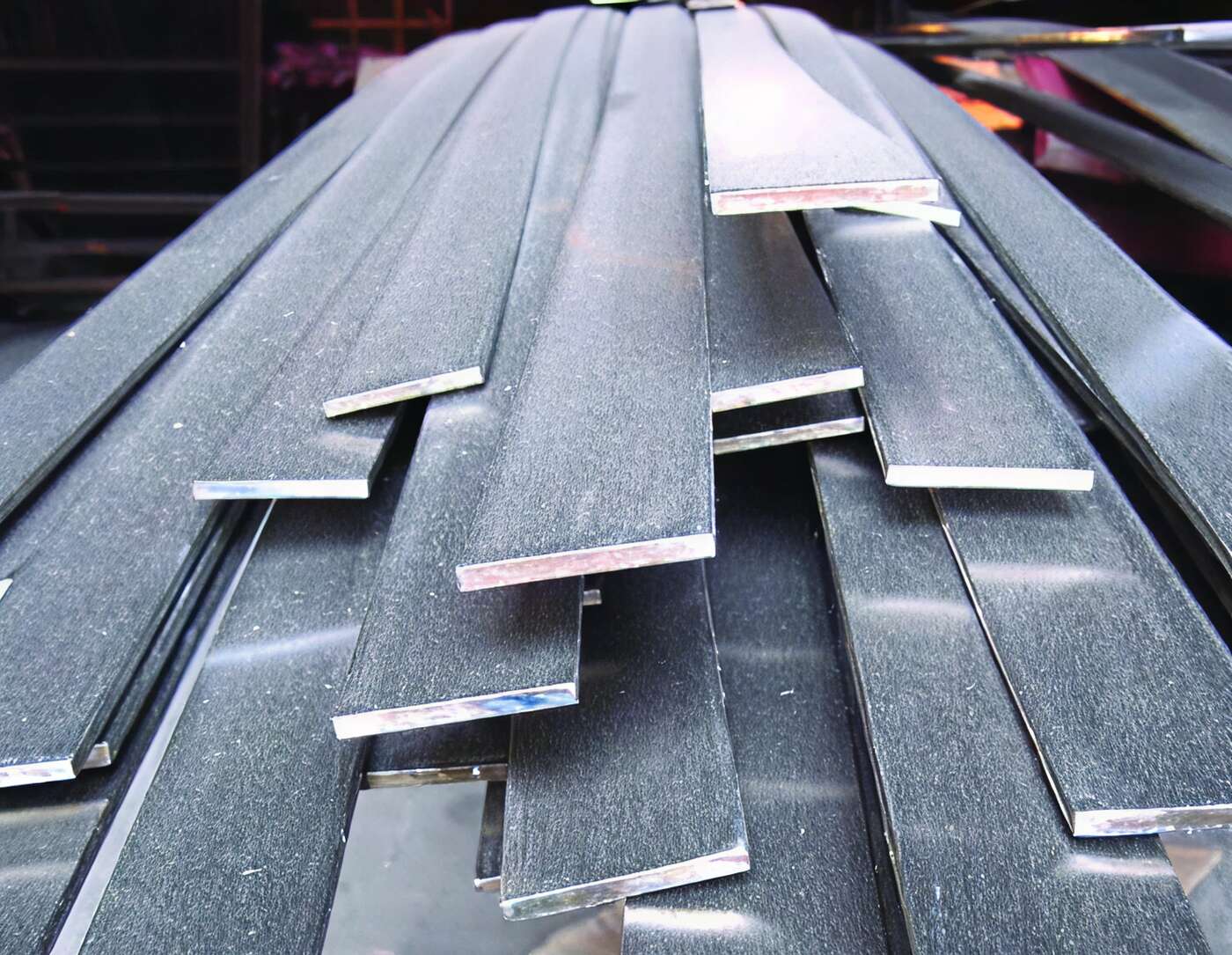
If you want to make quality metal products cost-effectively while sticking to tight schedules, you have to start with the right materials. That means choosing the right grade of alloy, as well as the right raw material shape and format for the job at hand.
One of the most common questions we get here at National Aluminum & Alloy: “Should I be ordering flat / square bars, or am I better off going with plate blanks?”
It sounds straightforward enough, but honestly the answer depends on your application, your shop’s capabilities, and how much time and money you want to spend before your aluminum ever becomes a finished part.
After decades of supplying aluminum and specialty alloys to manufacturers across industries, we’ve developed a pretty good sense of which direction to point our customers. Obviously, in many cases, your part drawing will specify one or the other: plate specs vs. bar specs, or extruded bar specs vs. cold finished bar specs. Otherwise, here’s how we think through choosing the optimum material.
Flat Bars and Square Bars vs. Plate Blanks: Your Basic Overview
Extruded flat bars and square bars come in fixed cross-section dimensions, while plate blanks are cut from larger plate stock. The simpler production process means extruded bar stock is generally cheaper than plate materials. But the bigger distinction is how much downstream work you’re creating for yourself.
Plate blanks offer flexibility: they’re great when you need a specific thickness and a non-standard footprint. But flat and square bars arrive closer to net shape, meaning your shop does less cutting, less squaring, and less material handling before the real work begins.
When to Choose Flat and Square Bar Stock
Choose flat or square bars when your design tolerances and cross-section dimensions align closely with standard bar sizes. In that case, there are numerous advantages:
- Tighter dimensional control out of the gate. Mill-produced bars hold tighter thickness and width tolerances than plate that’s been saw-cut or waterjet-blanked in-house. If your part requires consistent cross-section dimensions with minimal cleanup, bars save you a step.
- Less material waste. When a flat bar is already close to your finished width, you’re not generating scrap from a larger plate. For high-value alloys like 7075 or 2024, that waste adds up fast.
- Faster throughput in job shop environments. Bars are easier to fixture, easier to feed into saws and machining centers, and require fewer handling steps. When you’re running production quantities, that efficiency compounds.
- Structural and load-bearing applications. For brackets, frames, gussets, and support members, the grain structure and mechanical properties of extruded or rolled bar stock are often better suited to the application than plate.
When Plate Blanks Make More Sense
Plate blanks are the right call in plenty of situations. If the parts you’re manufacturing have an unusual footprint, or if they require a thickness outside standard bar sizing, or if you’re prototyping something where dimensions are still changing, plate gives you more flexibility in design.
Large, flat components (think tooling plates, fixture bases, or panel-style parts) are also natural candidates for plate rather than trying to join bar stock.
Optimizing Your Choice of Alloy
Don’t overlook alloy availability when making this decision. Flat and square bars are widely stocked in 6061-T6511, which covers the majority of structural and general machining applications. But if your engineering team spec’d 5083 for marine use, or you need 2024 for aerospace-grade fatigue performance, bar stock in those alloys may require lead time.
At NAA, we stock an extensive range and can often advise on alloy substitutions that keep your project moving without compromising performance.
Supplying the Right Materials for the Job at Hand
At NAA, we’re not trying to push you toward one product over another — we’d rather help you get the right material the first time. If you bring us your print or even a rough description of your application, we can usually give you a confident recommendation in minutes. It’s the kind of conversation our sales team has every day, and it’s genuinely one of the things we’re good at.